
Bandhani
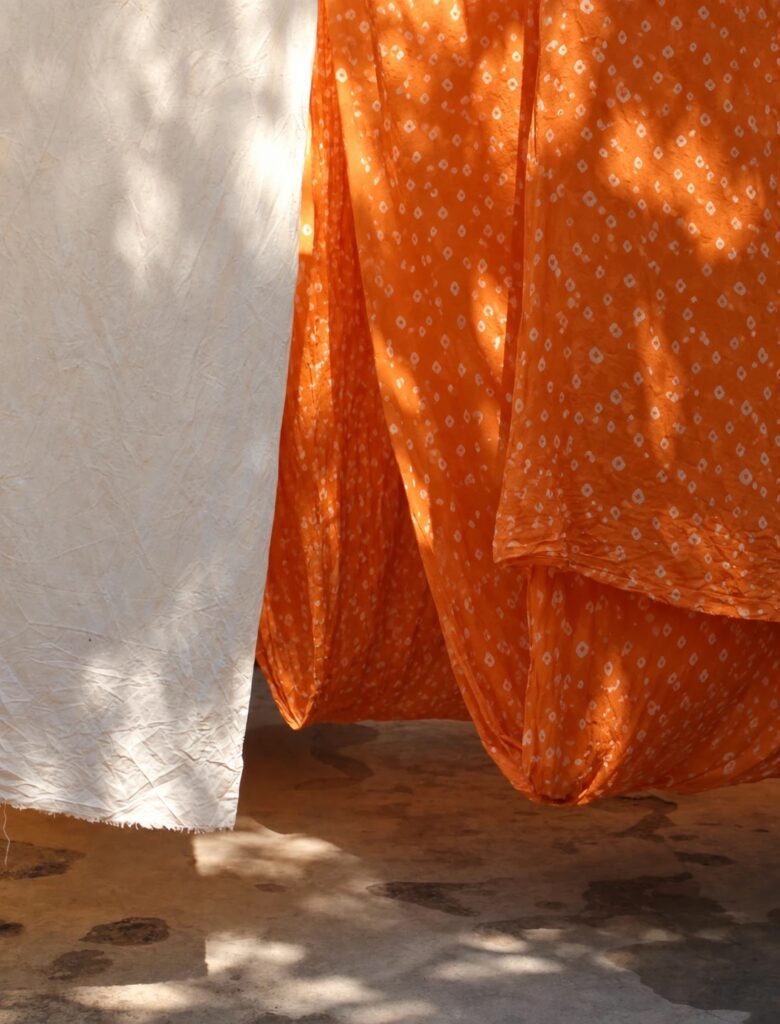
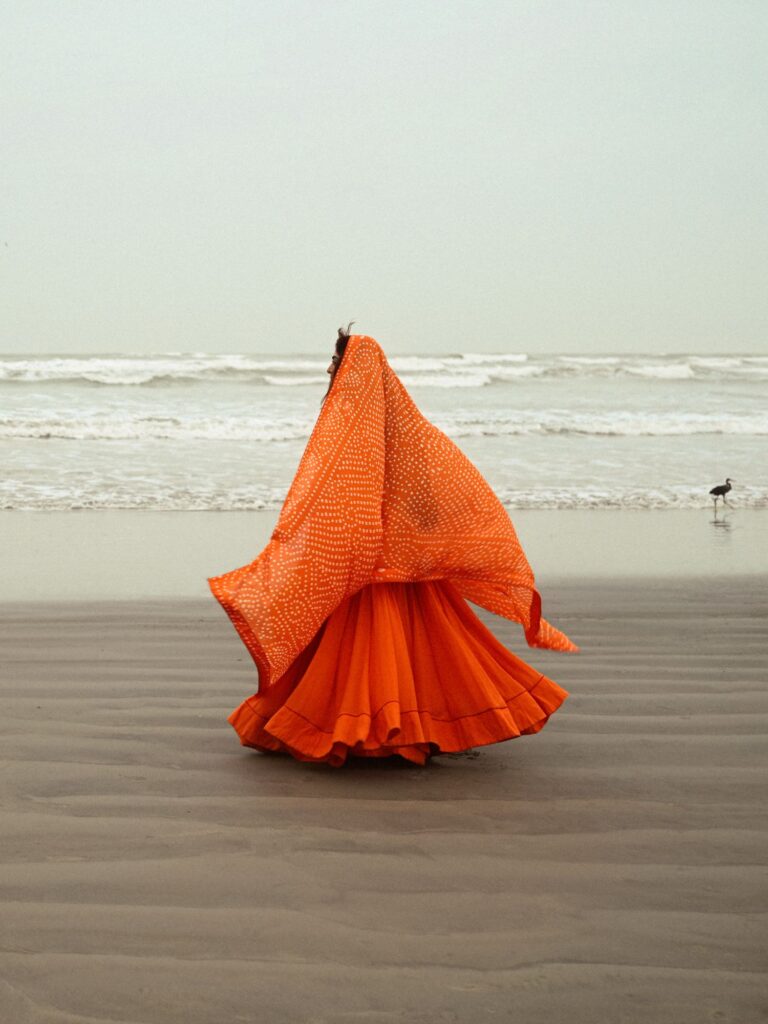
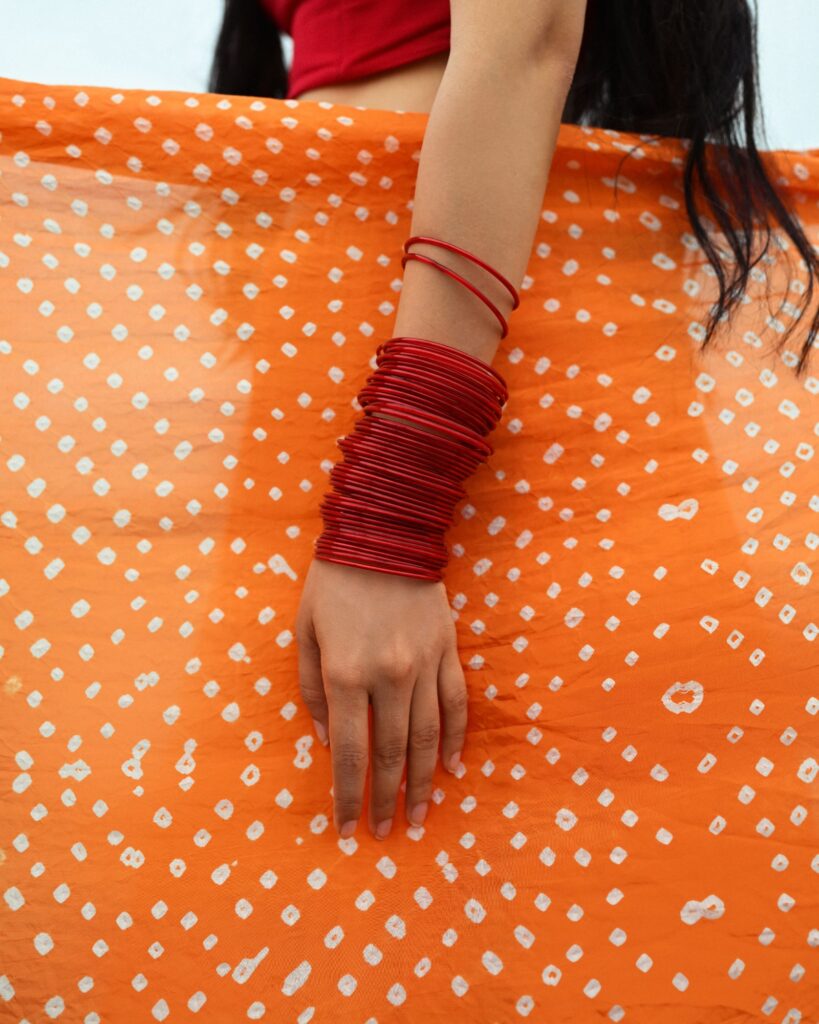
Bandhani derives its name from the Sanskrit word bandh, meaning “to tie” or “to bind.” An ancient form of resist-dyeing, the craft is deeply rooted in the textile traditions of western South Asia, particularly Gujarat, Rajasthan and Sindh. Its earliest visual evidence in the Indian subcontinent is found in the sixth-century Ajanta cave paintings, while Bana's seventh-century text, Harshacharita, contains an early literary reference to tie-dyed textiles.
The craft developed through interconnected networks of artisans, merchants and patrons across the region. In Kutch and Saurashtra, Bandhani became closely associated with the Khatri community, whose specialised knowledge of tying and dyeing has been transmitted across generations. The migration of craftspeople between Sindh and Gujarat contributed to the exchange of techniques and the evolution of distinct regional practices. By the eighteenth century, Bandhani textiles were also circulating through international trade networks, including exports to Europe.
Traditionally, Bandhani production was organised through family and community-based systems of labour. The intricate tying of the fabric was frequently undertaken by women, while dyeing and other stages of production were carried out by men. This division of work reflects a specialised body of knowledge in which pattern-making, material preparation and dyeing are closely interdependent. The craft continues to sustain artisan communities across Gujarat and Rajasthan, preserving a relationship between inherited knowledge, regional identity and textile production.